
A soft spot in your yard. Slow drains throughout the house. Grass that’s unnaturally green in one patch and dead in another. These aren’t just cosmetic problems—they’re warning signs that your sewer line may be cracked, collapsed, or leaking. In Edmond and Oklahoma City, a damaged sewer line doesn’t stay a small problem. It escalates quickly into foundation damage, skyrocketing repair bills, and a home that loses value. This post walks you through exactly what happens when a sewer line fails, why Oklahoma’s clay soil makes it worse, and what your repair options actually cost.
Your Lawn Is the First Victim of a Damaged Sewer Line.
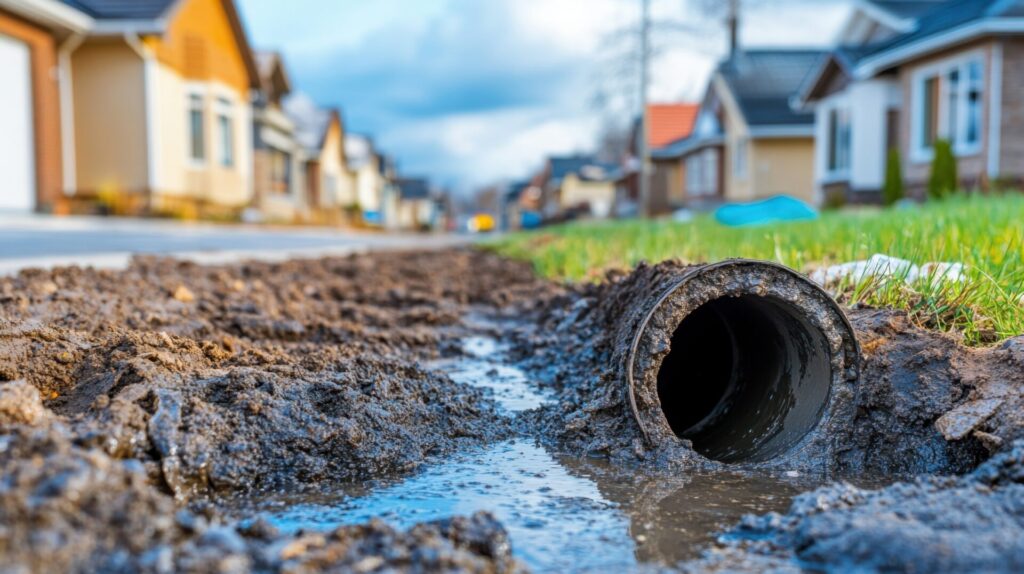
When a sewer line cracks or breaks, raw sewage leaks into the soil around your home. In Oklahoma’s clay-heavy ground, this creates visible, unmistakable damage.
Sewage acts as a fertilizer, which is why you’ll often see one patch of grass grow lush and impossibly green while the rest of your lawn struggles. That’s not a sign of good drainage. It’s a sign that human waste is feeding the roots. Over time, the soil becomes saturated and compacted. Grass dies. Bare patches appear. In some cases, the ground actually collapses, creating sinkholes or soft, spongy areas that give way when you walk on them.
Oklahoma’s freeze-thaw cycles make this worse. Water from the leaking sewer line freezes, thaws, and shifts the soil beneath your yard. Each cycle weakens the ground further. What starts as one soft spot spreads across your property.
The longer you wait, the larger the affected area becomes. What could have been a localized repair turns into a yard that requires complete regrading and resodding. That’s not a $2,000 fix. That’s a $5,000 to $10,000 landscaping project.
After a Sewer Line Cracks Foundation Damage Follows Close Behind
Your sewer line runs underneath or very close to your home’s foundation. When it leaks, the soil beneath your slab loses its structural integrity. This is where damaged sewer lines become a financial crisis.
In Oklahoma, our soil expands and contracts with moisture. Clay soil is especially prone to this movement. When your sewer line leaks, it saturates the soil under your slab, forcing it to expand. Your foundation shifts. Small cracks appear in your walls, floor, and basement. Those cracks grow. Water seeps in. And here’s the dangerous part: a leaking sewer line often leads to additional slab leaks in your water lines, compounding the damage.
We’ve seen homes in Edmond and Oklahoma City where a ignored sewer line problem led to foundation settling that required helical piering (a $15,000 to $25,000 repair). The homeowner initially ignored soft spots in the yard because they seemed minor. By the time they called for help, their foundation had already shifted several inches.
Once your foundation is compromised, your entire home is at risk. Doors and windows stop closing properly. Walls crack. Your home becomes harder to insure. Selling becomes a nightmare because inspection reports will flag the foundation issues, and buyers will demand massive discounts or walk away entirely.
Your Wallet Takes the Biggest Hit From Any Needed Sewer Line Repairs
The financial damage from a delayed sewer line repair follows a predictable and painful pattern.
Stage one: early warning signs. You notice odd smells in your yard, slow drains, or soft patches of grass. The repair using a camera inspection and targeted trenchless repair at this stage costs $2,000 to $5,000. Hi-Tech offers a $99 Drain Clearing Special With Camera Inspection to help you diagnose the problem early. This lets you see exactly what’s happening before costs spiral.
Stage two: foundation involvement. You ignored stage one. Now cracks appear in your foundation, water seeps into your basement, and your water bill has doubled because water is leaking into the soil. Repairs now cost $5,000 to $15,000, depending on how much of the slab is affected and whether your water lines are also damaged.
Traditional Dig-and-Replace vs. Trenchless Repair: What’s the Real Difference?
When your sewer line needs repair, you have two main options. Understanding the trade-offs will save you money and stress.
Traditional dig-and-replace: This is what most homeowners imagine. A crew digs a trench from your home to the street, removes the old pipe, installs a new one, and backfills the soil. For a 50-foot line, you’re looking at a trench across your entire front and side yard. Your driveway, landscaping, and sprinkler system may need to be torn out and rebuilt. The repair itself costs $3,000 to $8,000, but the restoration can add another $2,000 to $5,000. The timeline is 3 to 5 days.
Trenchless pipe rehabilitation: Using advanced camera technology and high-pressure water lines, technicians clean the existing pipe, then insert a new lining inside the old one. No digging. No destruction. Your lawn stays intact. Your driveway stays intact. The cost is typically $2,500 to $6,000 for the repair itself, and there’s no restoration cost because there’s nothing to restore. The timeline is 1 to 2 days.
For most Edmond and Oklahoma City homeowners, trenchless repair makes financial sense. You save on landscaping and driveway restoration, avoid the headache of a torn-up yard, and get the job done faster. Hi-Tech Plumbing’s trenchless pipe rehabilitation service uses this technology to repair cracks and collapsed sections without unnecessary damage to your property.
There are cases where traditional dig-and-replace is necessary (if the damage is too severe or if the pipe configuration doesn’t allow for lining). Your plumber should evaluate the camera inspection results and give you both options with clear cost comparisons before you decide.
What To Watch For: Early Warning Signs Of A Damaged Sewer Line In Your Home
Catching sewer line damage early is the key to avoiding financial catastrophe. If you notice any of these signs, call for a camera inspection right away.
- Slow drains throughout your home, especially if they’re happening simultaneously in multiple fixtures (toilet, sink, shower)
- Soft or spongy areas in your yard, particularly near where the sewer line runs.
- Unusually green patches of grass or sudden dead zones with no obvious cause.
- Cracks in your foundation or basement walls, especially if they’re new or growing.
- Raw sewage smell in your yard or near your home.
- Rodents, insects, or pest activity that’s unusual for your property (damaged sewer lines attract them).
Don’t assume these are separate problems. They’re often connected. A slow drain might seem like a clogged pipe, but it could be a cracked line downstream. A soft spot in your yard might seem like a drainage issue, but it could be sewage pooling in your soil.

FAQ: Common Questions About Damaged Sewer Lines
How do you know if your sewer line is damaged?
The most reliable way is a camera inspection. A plumber feeds a small camera through your cleanout, records the line, and shows you exactly where cracks, collapses, or root intrusions are happening. Hi-Tech offers this service as part of the $99 Drain Clearing Special With Camera Inspection. You’ll see the problem with your own eyes instead of guessing.
Can you repair a sewer line without digging?
Yes. Trenchless pipe rehabilitation is designed for exactly this purpose. It works for cracks and collapses in most residential sewer lines. Severe damage or unusual pipe configurations may require traditional repair, but your plumber can tell you after the camera inspection.
How much does a sewer line repair cost?
It depends on the damage and your repair method. Camera inspection and diagnosis: $100 to $150. Trenchless repair for a 50-foot line: $2,500 to $6,000. Traditional dig-and-replace with restoration: $5,000 to $15,000. Hi-Tech offers a $50 Off Repairs coupon to help with your costs.
Will my homeowners insurance cover sewer line repair?
Most standard policies do not. Sewer backup coverage is usually an add-on and has strict limits. Check your policy and talk to your insurance agent. This is why early detection and preventive maintenance matter so much.
How long do sewer lines last?
Clay pipe, which is common in older Oklahoma homes, lasts 50 to 100 years but fails faster in areas with tree roots or expansive soil. Cast iron lasts 75 to 100 years. Modern PVC lasts 100+ years. If your home was built before 1980, your sewer line is approaching the end of its life or already there.
Don’t Let a Small Problem Become a Foundation Disaster
A damaged sewer line isn’t something to ignore. It starts in your yard, moves under your foundation, and ends in your wallet. Oklahoma’s clay soil and freeze-thaw cycles make the damage happen faster than it does elsewhere.
The good news is that modern trenchless repair technology lets you fix the problem without destroying your property. A camera inspection takes a couple of hours and costs less than a dinner out. It shows you exactly what you’re dealing with so you can make an informed decision about repair options.
Hi-Tech Plumbing, Leak Detect & Drains serves Edmond, Oklahoma City, Bethany, Nichols Hills, The Village, Arcadia, Spencer, and Jones. We specialize in sewer line damage detection and trenchless repairs that preserve your yard and your budget.
Start with a $99 Drain Clearing Special With Camera Inspection to see what’s happening underground. Then we’ll give you a clear estimate for repair using trenchless technology or, if necessary, traditional methods. Take advantage of our $50 Off Repairs coupon to reduce your costs.
Call (405) 241-2985 today to schedule your inspection, or request service online.


BBB Accredited Business

Professional Staff

Award Winning Service
